Table of Contents
ToggleWorking from home has become the norm for millions, but not everyone has a dedicated office. The living room, already a hub for relaxation and family time, can double as a functional workspace without sacrificing style or comfort. The trick is choosing the right living room desk that fits your space, workflow, and aesthetic. Whether someone is working full-time remotely, freelancing part-time, or just needs a spot to handle household tasks, the right desk setup transforms a living room into a practical, professional environment. This guide explores five desk approaches that maximize productivity while maintaining the cozy, welcoming feel that makes a living room worth spending time in.
Key Takeaways
- Corner desks and wall-mounted options maximize productivity in small living rooms while keeping the workspace unobtrusive when not in use.
- Multi-functional living room desk solutions, like console tables and desk-bookshelf hybrids, blend seamlessly into decor by serving dual purposes without sacrificing aesthetics.
- Proper installation—anchoring floating desks into wall studs and adding task lighting with appropriate LED wattage—ensures safety, comfort, and reduced eye strain during work sessions.
- Desk style should match your living room’s aesthetic; industrial, modern minimalist, and mid-century designs each offer distinct visual footprints that either complement or crowd the space.
- Strategic placement, cable management, and minimal desk surfaces preserve the living room’s relaxation vibe while maintaining a functional professional workspace.
- Setting defined work hours and storing supplies out of sight when work ends helps maintain psychological boundaries between your workspace and relaxation areas.
Corner Desk Solutions For Small Living Rooms
Corner desks are a no-brainer for small living rooms. They use otherwise dead space and keep the workspace out of the main sightline when not in use. A corner desk that spans two walls gives someone 4 to 6 linear feet of work surface, enough for a laptop, monitor, and paperwork, without eating up the center of the room.
When shopping for corner desks, measure the actual corner space first. Account for baseboards, outlets, and any built-in shelving that might reduce usable depth. Most corner desk depths range from 20 to 24 inches: a 24-inch depth gives more elbow room if the living room can spare it.
A simple L-shaped particleboard desk (around 60 inches each side) costs $150–$400 and works well for basic setups. For durability, solid wood or veneer options hold up better to daily use. Consider adding a keyboard tray (roughly $30–$80) to adjust ergonomics and free up desk surface. If someone wants more storage without expanding footprint, a corner desk with shelving above, called a hutch desk, keeps supplies within arm’s reach. These run $300–$700 but turn a simple desk into an organized command center.
Compact Wall-Mounted Desks That Save Space
Wall-mounted desks are ideal when floor space is precious. A simple floating desk, usually 36 to 48 inches wide and 12 to 18 inches deep, mounts directly to wall studs and offers just enough room for a laptop and a small monitor. The cost ranges from $100 for basic models to $400+ for solid wood versions.
Installation matters here. Floating desks must anchor into wall studs (typically spaced 16 inches apart) using heavy-duty brackets rated for at least 50 pounds. Never rely on drywall anchors alone: they’ll fail under weight. If wall studs don’t align with desired placement, a contractor-grade hollow-wall toggle bolt can work temporarily, but studs are always the safer route.
A drop-leaf wall desk offers flexibility: the desktop folds up when not in use, creating minimal visual impact. These run $80–$250 and work especially well in living rooms where the desk shouldn’t dominate the decor. Some models include a small shelf above for monitors or storage. The trade-off is a narrower work surface (often 30 to 36 inches), so they suit lightweight work, writing, sketching, or video calls rather than multiple monitors and equipment.
Multi-Functional Furniture: Desks That Double As Decor
Multi-functional desks blend seamlessly into living rooms by serving double duty. A console table desk looks like living room furniture but has a deep enough surface (usually 14 to 18 inches) for a laptop setup. Many console tables include drawers or shelving, combining workspace with storage. Prices range from $150 to $600 depending on material and finish.
A bookshelf desk (or desk-bookshelf hybrid) uses vertical space and displays books, plants, or decor around the work area. This approach breaks up the “office” feel and makes the desk part of the room’s aesthetic. Some homeowners repurpose a sturdy coffee table by pairing it with a tall chair, creating an informal workspace: this works for occasional use but may feel awkward for eight-hour workdays.
An ottoman with a lap desk or tray ($50–$200) offers portability and makes the workspace easy to stash when visitors arrive. Upholstered styles in neutral fabrics disappear into living room decor. This option trades desktop real estate for flexibility, ideal for freelancers or part-time workers who don’t need a permanent setup.
Industrial And Modern Desk Styles For Living Spaces
Desk style should match the living room’s overall aesthetic. Industrial desks, featuring metal frames and wood tops, suit contemporary living rooms and age well. A typical industrial desk costs $250–$600, has a clean silhouette, and often includes metal shelving or cable management built in. The metal frame provides strength without bulk: some models support standing desk height adjustments ($400–$800).
Modern minimalist desks prioritize clean lines and neutral finishes. A white lacquer or natural wood desk (48 inches wide, 24 inches deep) runs $200–$500 and keeps the visual footprint light. These work best in smaller living rooms because they don’t visually “crowd” the space even when occupied.
Mid-century modern desks blend warmth and function: typically featuring angled legs and tapered proportions, they cost $300–$700. If someone’s living room leans vintage or eclectic, a teak or walnut mid-century desk becomes a design focal point, not just utilitarian furniture. The style consideration is important: a desk that clashes with the room’s decor will always feel “out of place,” even if functionally perfect.
Lighting And Organization Tips For Your Living Room Desk
Adequate lighting prevents eye strain during long work sessions. Overhead ceiling lights rarely provide enough focused light for task work. A task lamp ($30–$120) positioned to the side or back of the desk (not casting shadows on the screen) is essential. LED bulbs (9–12 watts for reading, 15+ watts for detailed work) produce cool, natural light without flickering or heat.
Organization keeps the workspace from looking cluttered and eating into the living room’s relaxation vibe. Use cable management clips ($5–$20) to bundle power cords and USB cables behind or under the desk. A small drawer organizer ($10–$30) holds pens, notepads, and small supplies without requiring a separate filing cabinet. Vertical storage, wall-mounted shelves or a narrow bookcase beside the desk, keeps supplies visible and accessible without consuming floor space.
Consider a desk pad or mat ($20–$50) for aesthetic appeal and surface protection. It visually grounds the desk, protects the desktop from scratches and spills, and muffles keyboard and mouse noise, important in a living room shared with others. Keep the desk surface minimal: only active projects and daily essentials should remain visible. Everything else gets filed or stored to maintain that living room feel.
Creating A Cohesive Design That Blends Workspace With Comfort
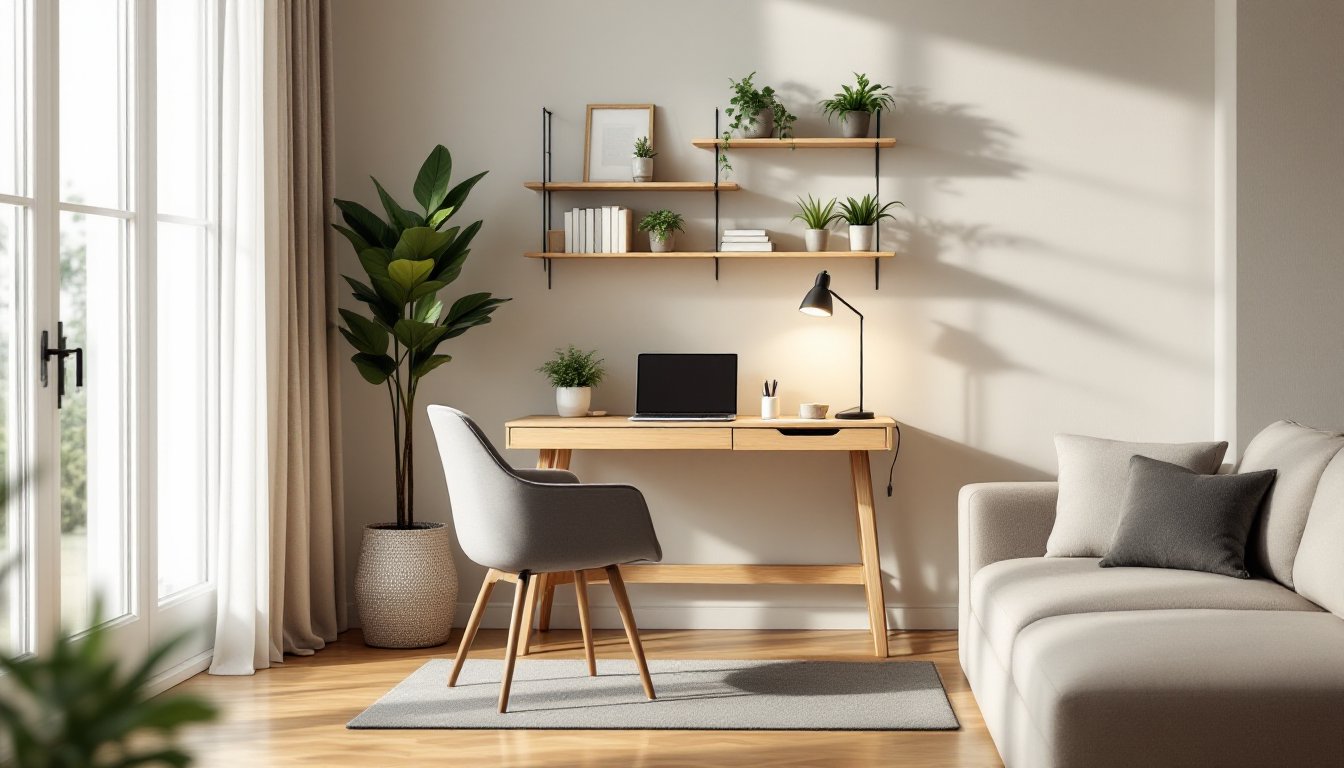
The best living room desk setup respects the room’s primary purpose: a place to relax and socialize. The desk shouldn’t visually dominate or feel like an intrusion. Positioning matters, placing the desk in a corner, against a wall, or behind a sofa creates visual separation from the main seating area without requiring a room divider.
Color coordination helps. If the living room uses warm neutrals (beige, gray, light brown), choose a desk in similar tones rather than stark white or black. A desk that echoes existing furniture, wood finishes, metal accents, or upholstered elements, feels intentional rather than tacked-on. Textiles like a desk chair with upholstery matching the sofa fabric ($150–$400) create visual cohesion.
Boundaries matter psychologically. Setting defined work hours and closing the desk (or draping a blanket over it) signals the end of the workday. A simple desk organizer box or rolling cart (under 24 inches wide, $50–$150) that stores supplies out of sight helps maintain the living room’s relaxed atmosphere when work isn’t happening. The goal is a space that feels like a purposeful part of the home, not a office awkwardly jammed into a living area.
Conclusion
A productive living room workspace doesn’t require compromise. By choosing the right desk style, size, and placement, and adding smart lighting and organization, someone transforms a multipurpose room into a functional professional environment without sacrificing comfort or aesthetics. The key is honest assessment: match desk type to actual work demands, measure the space carefully, and respect the room’s dual identity. Whether it’s a corner L-shaped desk, a floating wall-mounted surface, or a multi-functional console, the right living room desk setup pays dividends in productivity and peace of mind.