Table of Contents
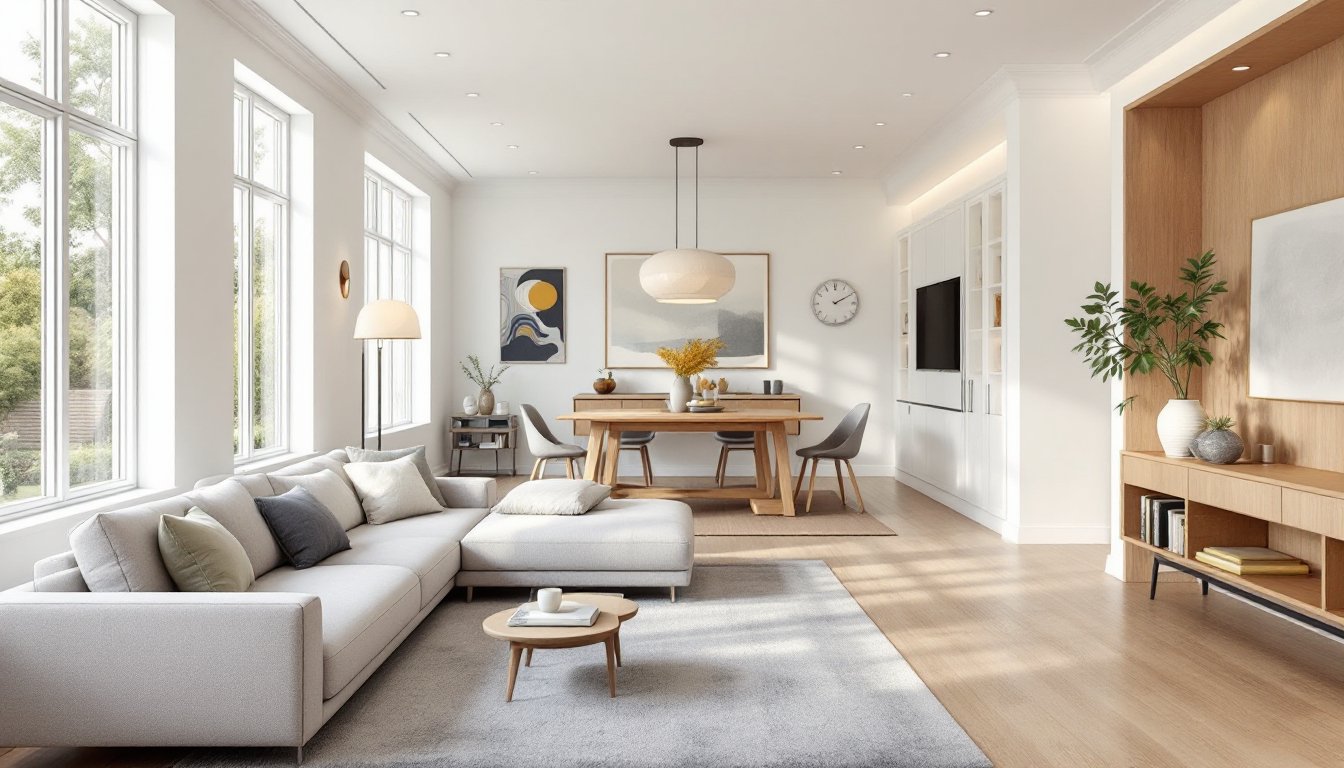
ToggleOpen-plan living and dining spaces have become the norm in modern homes, they offer flexibility, sight lines, and the illusion of more square footage. But they also present a real challenge: how do you make two distinct functional zones feel connected while keeping them visually and acoustically separate? Whether someone’s renovating an older home, redesigning a recently opened space, or planning a new build, the right approach to living room dining room design matters. This guide walks through practical ideas that balance aesthetics, functionality, and budget without requiring a major structural overhaul.
Key Takeaways
- Living room dining room design works best when zones are defined through furniture placement, lighting, and subtle dividers like rugs or low shelving rather than full walls.
- Floating furniture arrangements—pulling sofas and tables away from walls—create intentional boundaries between zones while improving conversation flow and making the space feel larger.
- A unified color palette with shared accent colors across both zones creates visual cohesion; aim for consistent wood tones within each zone while allowing slight variation between living and dining areas.
- Layer lighting strategically with ambient ceiling fixtures, task lighting (like dining pendants), and accent lighting to define each zone independently and allow flexibility through dimmers.
- Area rugs are the simplest separator for living room dining room spaces, anchoring each zone visually while maintaining sightlines and preventing the space from feeling cramped or chaotic.
- Measure your actual footprint, note architectural features like ceiling height changes, and consider traffic flow patterns before selecting furniture to avoid blocking pathways and maintain an open feel.
Defining Your Open-Plan Space
Before picking colors or moving furniture, take a hard look at the actual footprint. Measure the total square footage, note any load-bearing walls, and identify natural architectural breaks, a kitchen counter edge, a step down, or a change in ceiling height. These existing features are the foundation for zone planning.
Open-plan spaces work best when each zone has a sense of boundary without actual walls. A living room typically clusters around a TV or conversation area, while a dining zone focuses on a table. The distance between them matters: if they’re too close, noise and visual clutter bleed together. Ideally, at least a few feet of buffer space, or a subtle divider like a rug or low console, creates breathing room.
Consider traffic flow next. Doorways, hallways, and kitchen access routes will dictate where people naturally move. Arranging furniture to avoid blocking these pathways keeps the space feeling open and prevents that cramped, cluttered feeling. If the space is awkwardly shaped, say, an L-shaped or narrow rectangle, use that geometry deliberately rather than fighting it.
Furniture Layouts That Work
The furniture layout makes or breaks an open-plan space. Start by anchoring each zone with a key piece: a sofa or sectional for the living area, a dining table for the eating zone. These pieces should be proportional to the space, an oversized sectional in a small living room dining combo will choke the space.
Floating Arrangements for Flow
Floating furniture, pulling pieces away from walls rather than pushing them against the perimeter, sounds counterintuitive, but it actually opens up a room. A sofa pulled a few feet from the back wall with a console or bookshelf behind it creates a subtle border between living and dining zones without feeling like a barrier. This layout also improves conversation and makes the space feel intentional, not like furniture is just wherever there was empty wall.
For dining, keep the table centered in its zone with enough clearance, at least 2 to 3 feet, around all sides for chairs and traffic. Pair it with lightweight dining chairs that can be pushed under or stacked, so the visual footprint shrinks when not in use. Consider extending the dining zone with a low buffet, bar cart, or credenza that serves double duty for storage and visual definition.
Sectionals work well in open-plan living rooms because they define territory without eating the whole space. An L-shaped or U-shaped sectional can anchor one corner, freeing up the rest of the zone for additional seating, an accent table, or a media console. Just avoid oversized sectionals that turn the room into furniture storage.
Color Palettes and Cohesive Design
Color ties open-plan spaces together, or fragments them. A unified palette across both zones creates flow: wildly different color schemes make the space feel disjointed. That doesn’t mean everything must match: it means establishing a base and building from it.
Start with neutral wall colors, soft whites, warm grays, or muted beiges work as a blank canvas. Then layer personality through accent colors on furnishings, artwork, and decor. A warm gray living room and an adjacent dining area painted in soft white still feel connected if they share an accent color, say, a blue-green used in pillows, dining chairs, or artwork.
Wood tones matter too. Mixing finishes, a light oak table with dark walnut cabinetry, is fine, but within each zone, aim for consistency. If the dining table is warm honey-stained wood, keep seating and storage in similar warmth. The living room can shift slightly lighter or darker, but extreme contrasts (ebony-black storage paired with honey-blonde seating) create visual conflict.
Floor materials also define zones subtly. If an open-plan space has one continuous flooring, hardwood or concrete throughout, use an area rug to anchor and separate each zone. A rug under the sofa and one under the dining table create visual break points without closing off the space. The same principle works with mixed flooring: wood in one zone, tile in another, connected by a neutral transition area.
Lighting Solutions for Dual Zones
Lighting is where many open-plan designs fail. A single overhead fixture floods the whole space uniformly, which feels flat and doesn’t acknowledge the two zones. Instead, layer lighting to create depth and define areas independently.
Start with ambient lighting: a central ceiling fixture or recessed lights provide baseline illumination. Then add task lighting, a dining pendant or chandelier directly above the table, and a floor lamp or wall sconce beside the seating area. These task lights create functional pools of light that reinforce zone boundaries. A 3-light pendant cluster above a dining table (sized proportionally, aim for 24 to 36 inches from table surface) feels intentional and separate from the living zone.
Accent lighting, LED strip under floating shelves, picture lights on artwork, or uplighting behind a bookcase, adds depth and interest without being overhead glare. This is especially useful in open plans because it allows fine-tuning. Want to emphasize the living zone? Increase accent lighting there. Want to draw the eye to the dining table? A dimmer-controlled pendant does that.
Dimmers throughout are essential. The ability to dial down overhead and task lighting for evening entertaining or soften glare during the day makes the space more flexible. Position switches near both zones if possible, so whoever’s in the living room or dining area can adjust lighting without crossing the space.
Creating Visual Separation Without Walls
When open-plan spaces feel chaotic, it’s usually because the zones blend too much. Physical dividers, low shelving, room dividers, or partial-height walls, create separation without fully enclosing the space.
A low bookcase or credenza (roughly 36 to 42 inches tall) positioned between zones acts as a boundary that still allows sightlines over the top. It’s also functional: display books, plants, or decor on the living room side, and reserve the back for dining room essentials or hidden storage. This works psychologically: people instinctively recognize it as a zone boundary.
If budget allows, a partial-height wall, built 4 to 6 feet high instead of full ceiling height, provides acoustic separation and visual definition without fully closing off the space. It requires framing, drywall, and finishing, but it’s less invasive than a full wall and improves noise control significantly. Building codes vary by jurisdiction, so check local requirements: most partial walls still need basic framing to code.
Alternatively, a free-standing room divider, a decorative screen, fabric panel, or slatted wood divider, offers flexibility. It can be moved, adjusted, or removed without commitment. Look for styles that complement the overall aesthetic: mid-century wood screens for modern spaces, fabric-stretched frames for softer decor, or slatted panels for minimalist designs.
Area rugs are the simplest separator. Position one anchoring the sofa and another under the dining table: the visual weight and texture break grounds the zones without physical barriers. Layer a smaller accent rug atop the main dining rug for extra definition.
Conclusion
Open-plan living room dining spaces thrive when planning is intentional. Define zones through furniture placement, anchor each area with lighting, unify through color, and use subtle visual separators, rugs, low dividers, or floating arrangements, to distinguish without closing off. The goal isn’t perfection: it’s creating two functional, visually coherent zones that work together as one flexible space. Start with the bones of the room, choose a layout that matches traffic flow, and build from there.